Retirement Planning
Saving enough money for retirement can seem like a difficult task. With each stage in life comes a different objective and time horizon. PathKeeper Financial is dedicated to helping you each step of the way to make sure your retirement years are the golden years.
Ages 20-49: Saving
Every dollar saved when you are young helps you reach your goal thanks to the power of compound interest. Compound interest allows interest to earn interest, and the more time you have, the more interest you will earn. In fact, if you start young, it takes less money saved each month to have a high nest egg at retirement than waiting until your 40s or 50s to start saving (see image below). Individuals and families should save early and save, even if they do not make a lot of income.
Young adults should always take advantage of employer-sponsored retirement plans including 401(k) and 403(b) plans. These plans sometimes offer an employer match to incentivize employee savings. For example, if your employer offers a 3% match on any employee contribution, for an employee earning $50,000 a year, this is $1,500 contributed by the employer to your retirement plan. That is on top of the $1,500 the employee already saved, assuming 3% contributions.
As your income increases, it is easy for expenses to increase as well. Be sure to stick to your savings plan to stay on the right path as you move toward your peak earning years. At this stage, you should aim to contribute the maximum amount allowed to your employer-sponsored plans as well as IRAs and Roth IRAs, depending on the situation. Most investors can afford to be more aggressive during their younger years.
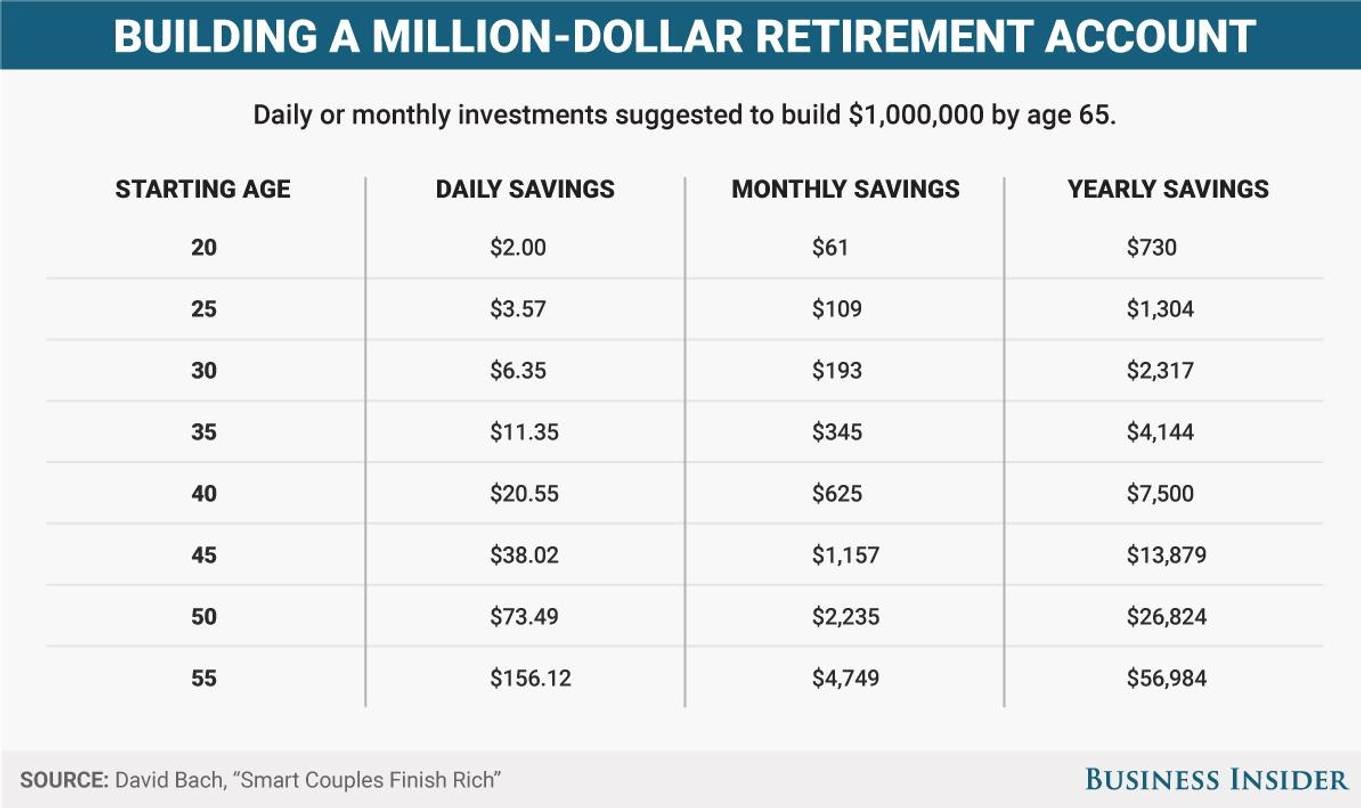
This is a hypothetical example and is not representative of any specific situation. Your results will vary. The hypothetical rates of return used do not reflect the deduction of fees and charges inherent to investing.
Ages 50-64: Earning
At this stage in your career, you are likely at your peak income levels and should look to be slightly more conservative with investments. Retirement age is closing in and you want to have the proper allocation to protect against any downfalls when that day comes. You should continue to contribute to employer-sponsored plans as well as IRAs and to contribute the maximum amount allowed where you can. If you have not started saving yet, it is never too late. It is going to take more money per month to reach your goals, but it is not impossible.
There are many important financial decisions to consider as you near retirement age. Should you pay off your mortgage before retirement? Should you consider buying long- term care insurance before retirement? What age can you actually afford to retire? Your financial planner can help you make the best decision for your unique situation.
Ages 65+: Living
Now is the time to enjoy the money you have worked so hard to save over your career. In this stage of your life, you begin to spend your savings to replace your normal job income. A typical rule of thumb when deciding how much you should take out of your retirement accounts to ensure you do not run out of money is 4% withdrawals. This allows a conservative portfolio the chance to earn interest exceeding 4% and still stay ahead of inflation in your account(s). For perspective, this would be a $20,000 annual withdrawal on a $500,000 portfolio, or $40,000 withdrawal on a $1,000,000 portfolio, etc. You can always spend more or less than that depending on your unique situation but once again, 4% is just a rule of thumb to help you outlive your money. PathKeeper Financial can help you manage your finances so that your hard-earned money lasts your entire life.
Individuals in this stage of life often begin to gift more money to family as well as charities. It is important to work with your financial planner to take advantage of tax savings strategies. You should also regularly review your succession plan to ensure your wishes are honored at your passing.
Investing involves risk including loss of principal. No strategy assures success or protects against loss.